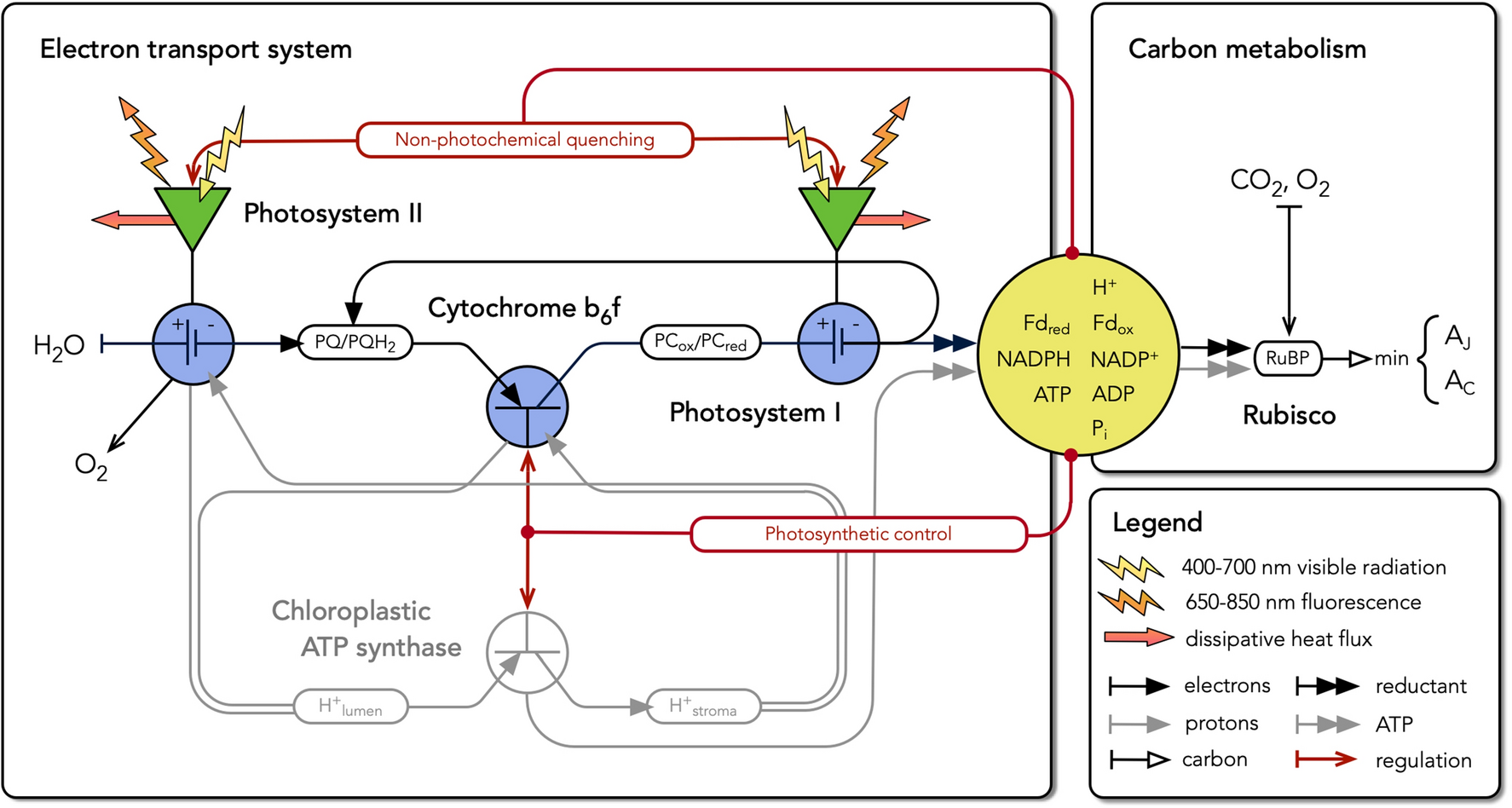
The Johnson & Berry (2021) model is a mechanistic, steady-state framework
designed to extend the classical Farquhar, von Caemmerer, and Berry (FvCB) model of leaf photosynthesis.
It integrates the light reactions (Photosynthetic Electron Transport, or PET) with the dark reactions (Calvin-Benson-Bassham cycle, or CBBC)
to explore how steady-state photosynthesis is controlled under varying environments. While conventional models assume control abruptly
switches between Rubisco-limited and RuBP-regeneration-limited states, Johnson & Berry demonstrate that control is shared continuously.
The Cytochrome () complex serves as a primary kinetic regulatory bottleneck—acting as a metabolic switch
that balances energy capture with carbon assimilation. The model introduces a mechanistic formulation for how the transthylakoid proton gradient
acts via feedback loop to down-regulate plastoquinol oxidation at the complex. This process occurs rapidly to protect Photosystem I (PSI)
from over-reduction and photoinhibition.
Unlike traditional dynamic frameworks that rely on systems of Ordinary Differential Equations (ODEs), the Johnson & Berry model operates
purely under steady-state assumptions. The model translates four primary environmental input variables (Temperature, Light, , and ) into functional photosynthetic metrics.
Scheme
Model definition
Parameters
| Symbol | ID | Value | Unit |
|---|---|---|---|
| PAR | 800 | ||
| Temp | 25 | ||
| CO2 | 200 | ||
| O2 | 209 | ||
| Abs | 0.85 | ||
| beta | 0.52 | ||
| CB6F | 0.0000011666666666666668 | ||
| RUB | 0.00002777777777777778 | ||
| Rds | 0.01 | ||
| Ku2 | 0 | ||
| theta1 | 1 | ||
| eps1 | 0 | ||
| eps2 | 1 | ||
| nl | 0.75 | ||
| nc | 1 | ||
| Kf | 50000000 | ||
| Kd | 550000000 | ||
| Kp1 | 14500000000 | ||
| Kn1 | 14500000000 | ||
| Kp2 | 4500000000 | ||
| kq | 300 | ||
| kc | 3.6 | ||
| ko | 0.9720000000000001 | ||
| Kc | 0.00026 | ||
| Ko | 0.179 |
Derived quantities
| Symbol | ID | Equation | Unit |
|---|---|---|---|
| Q | |||
| C | |||
| O_bar | |||
| Vqmax | |||
| Vcmax | |||
| Rd | |||
| S | |||
| gammas | |||
| eta | |||
| phi1P_max | |||
| a2 | |||
| a1 | |||
| JP700_j | |||
| JP680_j | |||
| Vc_j | |||
| Vo_j | |||
| Ag_j | |||
| Vc_c | |||
| Vo_c | |||
| Ag_c | |||
| JP680_c | |||
| JP700_c | |||
| JP680_a | |||
| JP700_a | |||
| Ag_a | |||
| An_a | |||
| phi1P_a0 | |||
| q1_a | |||
| phi2P_a0 | |||
| CB6F_a | |||
| q2_a | |||
| num_kn | |||
| Kn2_a | |||
| denom2 | |||
| denom2c | |||
| phi2p_a | |||
| phi2n_a | |||
| phi2d_a | |||
| phi2f_a | |||
| phi2u_a | |||
| phi2P_a | |||
| phi2N_a | |||
| phi2D_a | |||
| phi2F_a | |||
| denom1_open | |||
| denom1_closed | |||
| phi1P_a | |||
| phi1N_a | |||
| phi1D_a | |||
| phi1F_a | |||
| Fm_a | |||
| Fo_a | |||
| Fmp_a | |||
| Fop_a | |||
| Fs_a | |||
| PAM1_a | |||
| PAM2_a | |||
| PAM3_a | |||
| ETR | |||
| qP | |||
| qL | |||
| kPuddle | |||
| kLake | |||
| NPQ | |||
| active_cb6f | |||
| k_CB6F |
Curation
- July 2026: Maintenance by Marvin van Aalst
- July 2025: Initial implementation by Josha Ebeling
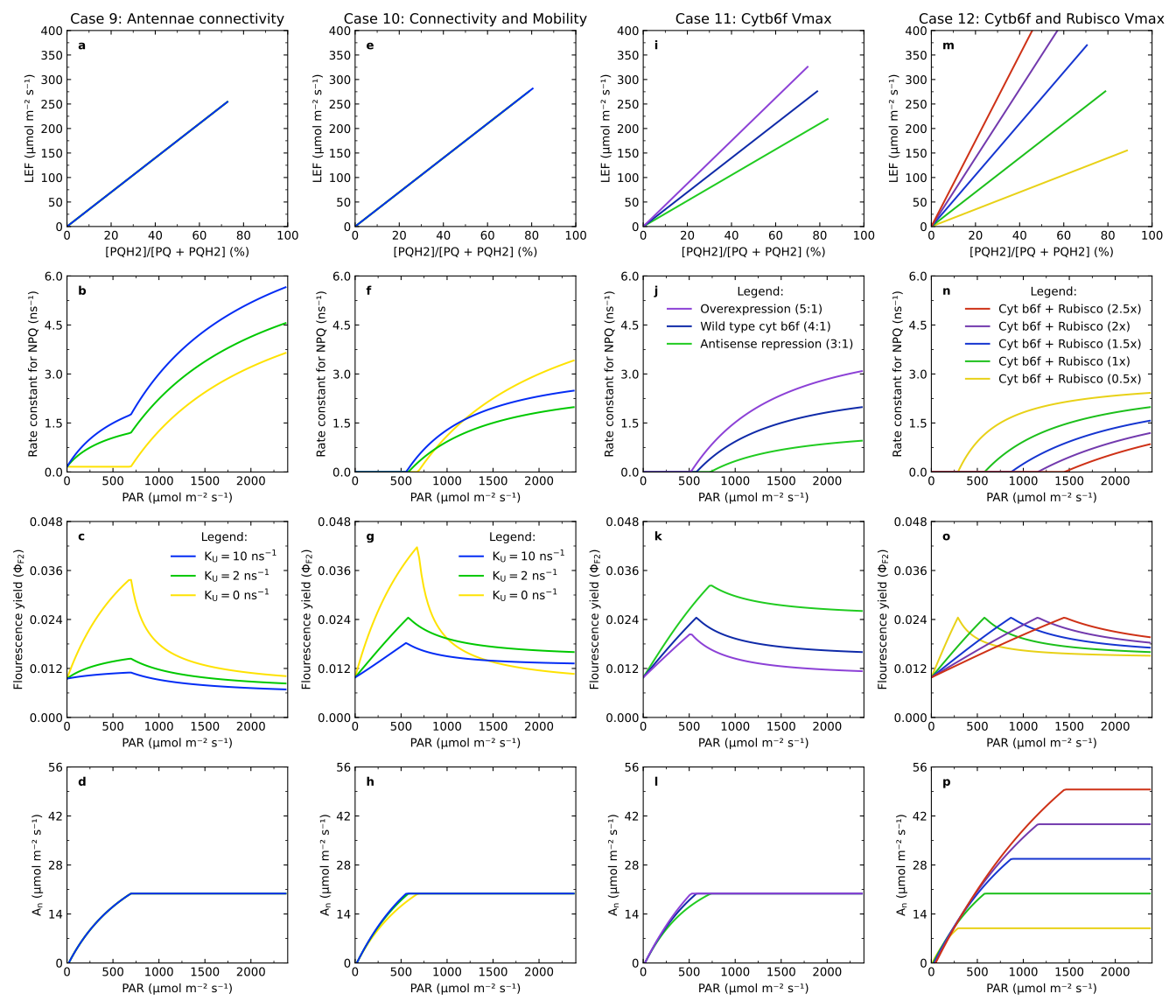
This model was validated by reproducing the following figures of the original publication. Due to copyright restrictions, a side-by-side comparison of the original figures is not shown here.
The model cannot replicate the figures from the respective publication to 100% numerical accuracy, but the general trends and numerical values are mostly correct. The differences in the reproduction and the publication stem from the fact that the simulation details to produce the figures are not provided with the model code. The description in the model does not clearly disclose which parameters were used and the ranges over which they were varied, so these had to be guessed. This unknown factor plausibly caused the apparent discrepancies.
Figures
Fig6
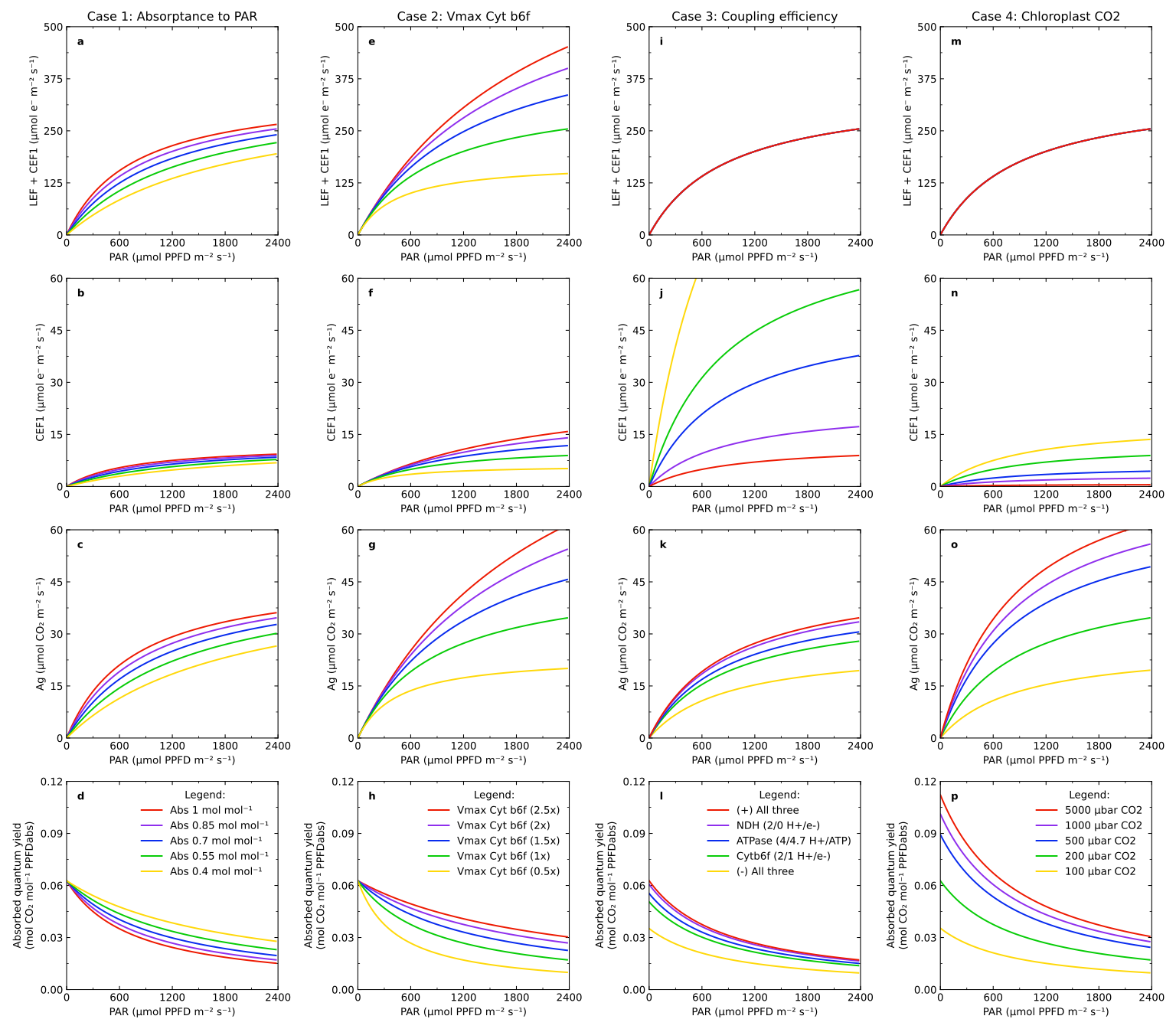
Fig7
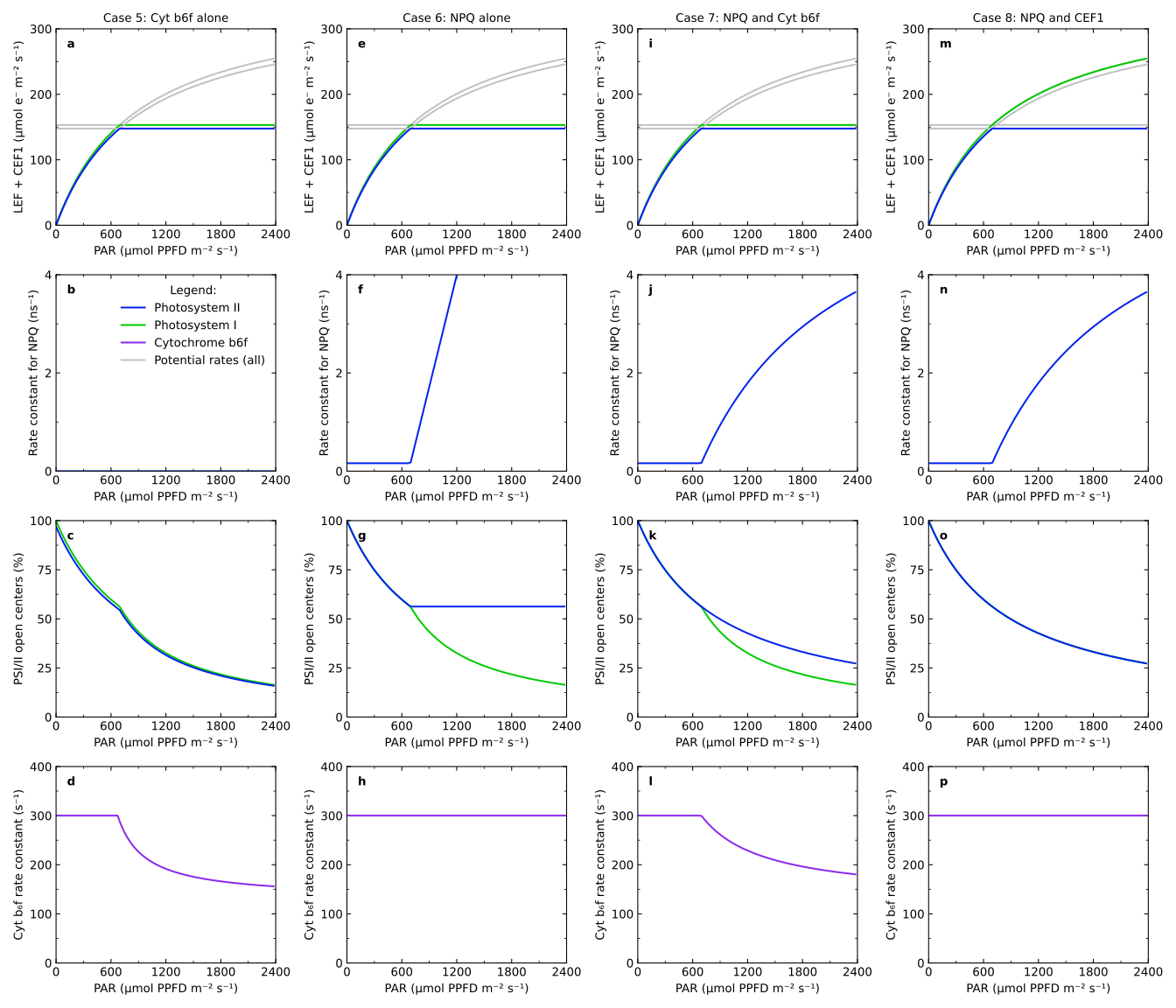
Fig8