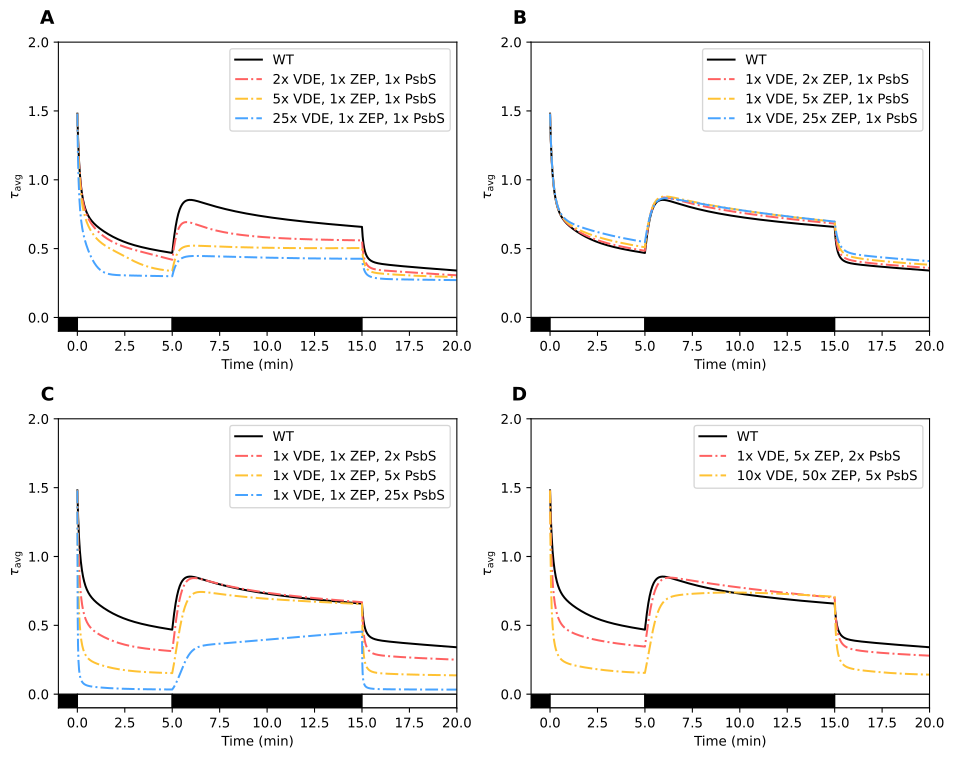
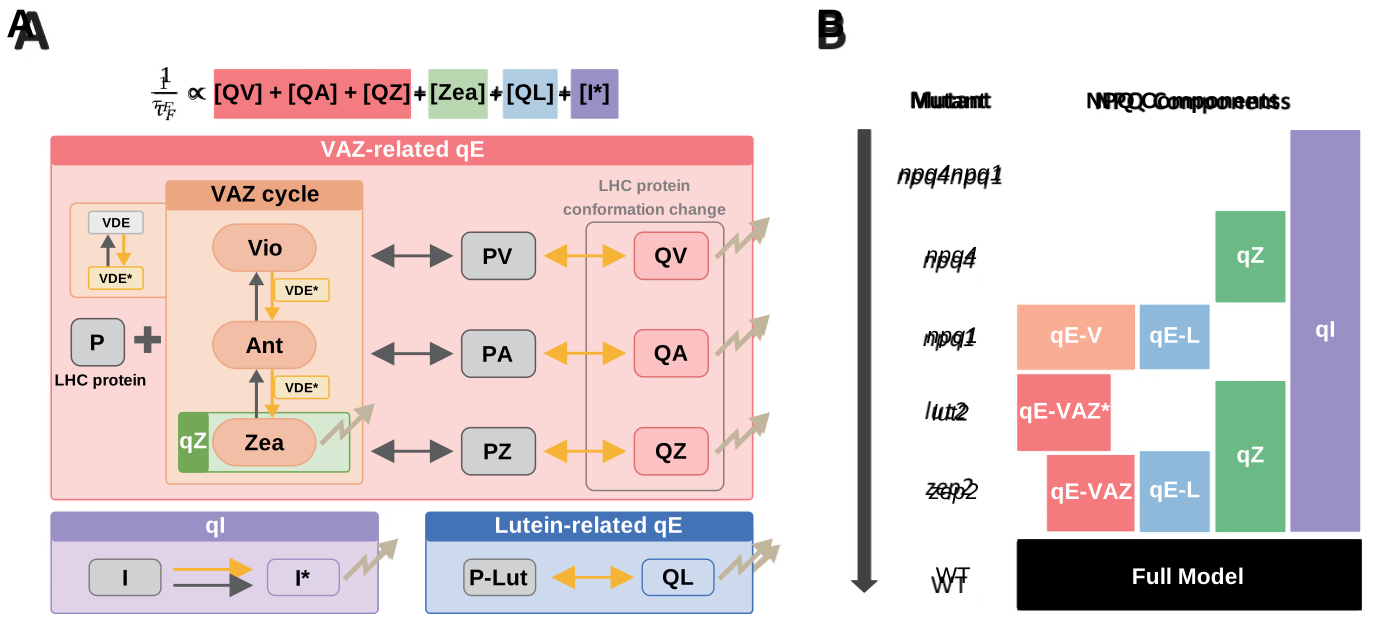
The Lam 2026 model — "Dissecting the contributions to non-photochemical quenching in a land plant under fluctuating light" — is a fluorescence-lifetime-based kinetic model of non-photochemical quenching (NPQ) built to separate the individual photoprotective mechanisms that operate in a vascular land plant. It was parameterised against whole-leaf chlorophyll fluorescence-lifetime and xanthophyll-concentration measurements made on wild-type Nicotiana benthamiana and a panel of NPQ mutants, which let the authors assign a per-molecule quenching effectiveness to each xanthophyll and tease apart the distinct quenching components. Accordingly, the model tracks the xanthophyll-cycle pigments — violaxanthin (V), antheraxanthin (A) and zeaxanthin (Z) — together with their association with the PsbS- and antenna-bound quenching states (the PV/PA/PZ and QV/QA/QZ/QL/PL species), the violaxanthin-deepoxidase activation that drives the cycle, and a PSII photodamage term.
Because it is calibrated on time-resolved fluorescence lifetimes rather than steady-state amplitudes, the model can quantitatively predict both wild-type and mutant NPQ behaviour across light–dark regimes and fluctuating light, and it is used to explore how the relative amounts of the regulatory enzymes (the VDE : ZEP : PsbS ratio) shape the trade-off between photoprotection and light-harvesting efficiency — with implications for improving crop yield. It is included in GreenSloth as a recent, data-driven model that resolves the kinetics of the xanthophyll cycle and the multiple distinct contributions to NPQ in unusual detail.
Scheme
Model definition
Variables
| Symbol | ID | Initial value | Unit |
|---|---|---|---|
| V | |||
| A | |||
| Z | |||
| PV | |||
| PA | |||
| PZ | |||
| QV | |||
| QA | |||
| QZ | |||
| QL | 0 | ||
| PL | 165 | ||
| PSIId | 0 | ||
| alpha_VDE |
Parameters
| Symbol | ID | Value | Unit |
|---|---|---|---|
| k_L_VA | 2.47 | ||
| k_D_VA | 0.014 | ||
| k_L_AZ | 0.5 | ||
| k_AV | 1.12 | ||
| k_ZA | 0.07 | ||
| k_PV_f | 2.18 | ||
| k_PV_b | 9.43 | ||
| k_PA_f | 130 | ||
| k_PA_b | 254 | ||
| k_PZ_f | 295 | ||
| k_PZ_b | 126 | ||
| k_L_QV_f | 0.027 | ||
| k_D_QV_f | 0 | ||
| k_QV_b | 0.066 | ||
| k_L_QA_f | 0.66 | ||
| k_D_QA_f | 0 | ||
| k_QA_b | 8.57 | ||
| k_L_QZ_f | 0.56 | ||
| k_D_QZ_f | 0 | ||
| k_QZ_b | 1.22 | ||
| k_L_QL_f | 0.056 | ||
| k_QL_b | 3.68 | ||
| k_D_QX_f | 0 | ||
| k_L_damage | 0.0222 | ||
| k_D_damage | 0.0161 | ||
| k_D_VDE | 0.24 | ||
| k_L_VDE | 0.28 | ||
| k_AV_aba1 | 0.006 | ||
| k_ZA_aba1 | 0.038 | ||
| k_PV_f_lut2 | 1.43 | ||
| k_PV_b_lut2 | 13.1 | ||
| k_PA_f_lut2 | 34.4 | ||
| k_PA_b_lut2 | 294 | ||
| k_PZ_f_lut2 | 74.1 | ||
| k_PZ_b_lut2 | 168 | ||
| V_tot_npq1 | 49.8 | ||
| V_tot_lut2 | 71.2 | ||
| V_tot_npq4 | 40.6 | ||
| V_tot_aba1 | 10.7 | ||
| V_tot_WT | 35.9 | ||
| P_tot | 45.4 | ||
| P_tot_lut2 | 49.9 | ||
| kappa_QV | 0.04 | ||
| kappa_QA | 0.174 | ||
| kappa_QZ | 0.177 | ||
| kappa_QL | 0.262 | ||
| kappa_qZ | 0.03 | ||
| kappa_qI | 3.86 | ||
| kappa_qI_double_mut | 7.05 | ||
| ppfd | 0 | ||
| tau_0 | 1.730890791 | ||
| PSII_tot | 1 |
Derived quantities
| Symbol | ID | Equation | Unit |
|---|---|---|---|
| gamma | |||
| k_D_AZ | |||
| Keq_pz | |||
| Keq_pv | |||
| Keq_pa | |||
| Keq_a | |||
| Keq_z | |||
| Keq_qv | |||
| Keq_qa | |||
| Keq_qz | |||
| P0 | |||
| A_0 | |||
| Z_0 | |||
| PV_0 | |||
| PA_0 | |||
| PZ_0 | |||
| QV_0 | |||
| QA_0 | |||
| QZ_0 | |||
| X_tot | |||
| kappa_r_nr | |||
| PSII_active | |||
| P_free | |||
| tau_Fluo | |||
| NPQ_V | |||
| NPQ_A | |||
| NPQ_Z_qE | |||
| NPQ_L | |||
| NPQ_Z_qZ | |||
| NPQ_qI |
Reactions
| Symbol | ID | Rate | Stoichiometry | Unit |
|---|---|---|---|---|
| VA | ||||
| AV | ||||
| AZ | ||||
| ZA | ||||
| PVf | ||||
| PVb | ||||
| PAf | ||||
| PAb | ||||
| PZf | ||||
| PZb | ||||
| QVf | ||||
| QVb | ||||
| QAf | ||||
| QAb | ||||
| QZf | ||||
| QZb | ||||
| QLf | ||||
| QLb | ||||
| damage | ||||
| v_alpha_VDE |
Curation
- July 2026: Maintenance by Marvin van Aalst
- June 2026: Initial implementation by Quang Huy Nguyen
This model was validated by reproducing the following figures of the original publication. Due to copyright restrictions, a side-by-side comparison of the original figures is not shown here.
The model shows discrepancies between the paper's description and the provided MATLAB code. However, the overall structure of the model is valid, and the overall behaviours of all genotypes mentioned can be mostly replicated across all figures. Note: Slight adjustment of the parmeter values, compared to the orginal from the paper, has been taken to reproduce better the figures.
Figures
Fig2
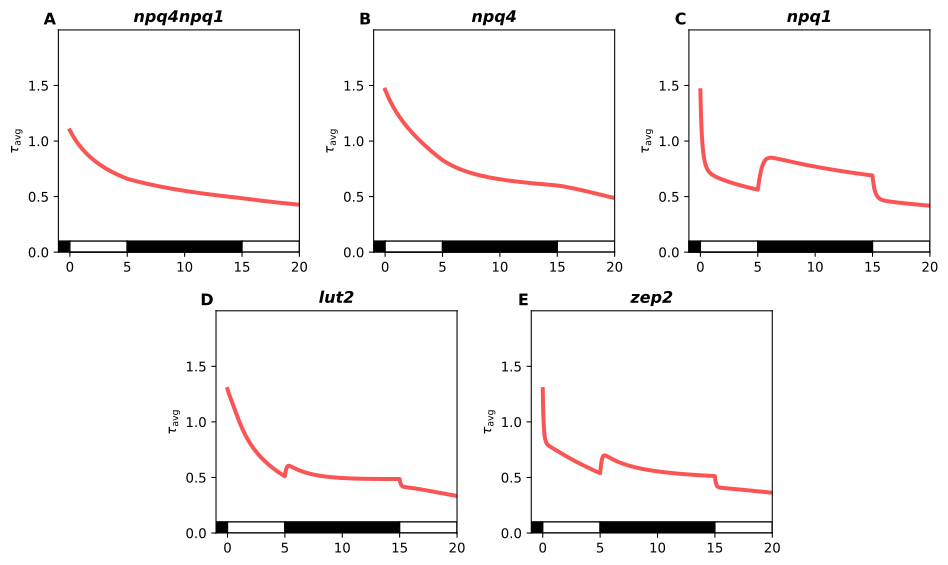
Fig3
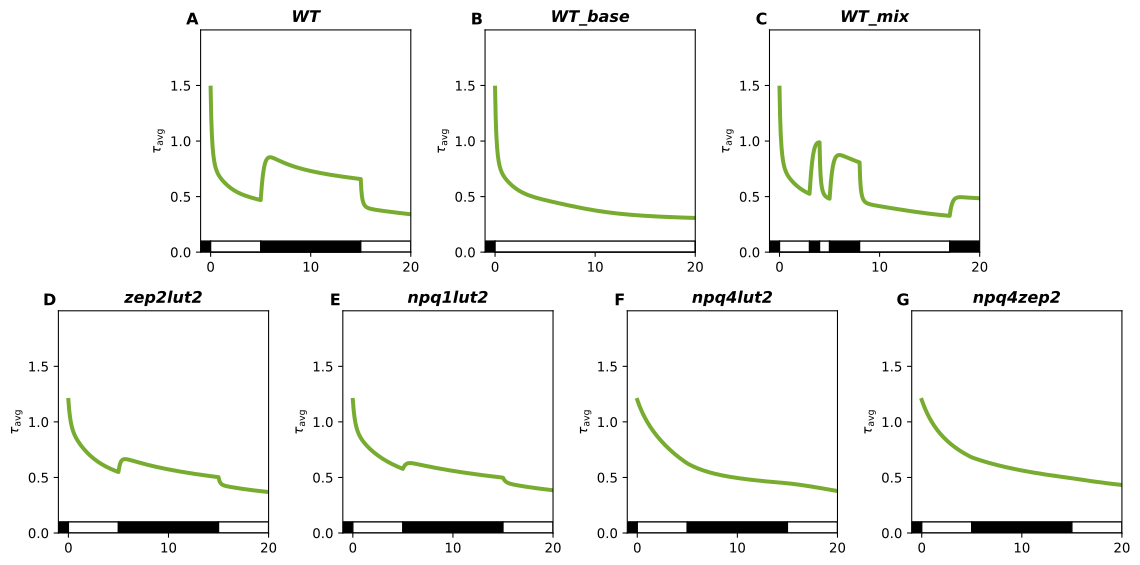
Fig4
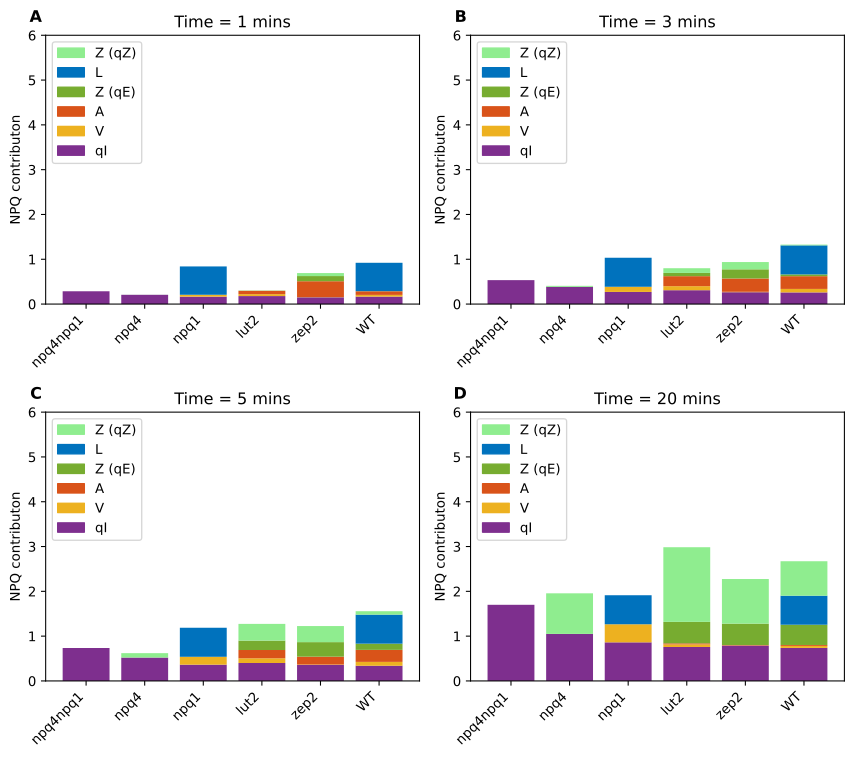
Fig5